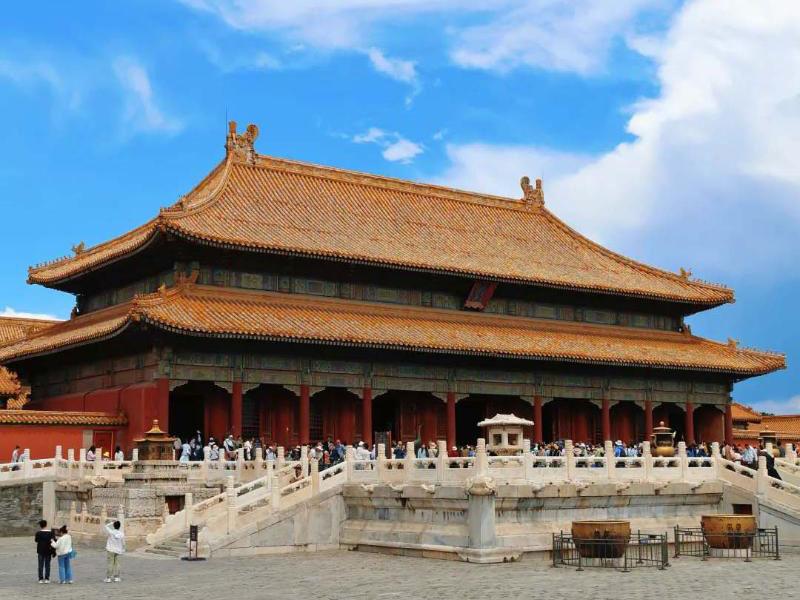
The Palace Museum is located in the heart of Beijing. It was built as the imperial palace during the Ming and Qing dynasties and is known as the Forbidden City. Founded in 1925, it is now a large museum sitting on 720,000 square meters of land, with over 1,000 wooden buildings . It is a UNESCO World Heritage Site and home to more than 1.86 million cultural relics . This is the largest and best-preserved ancient palace complex in China .
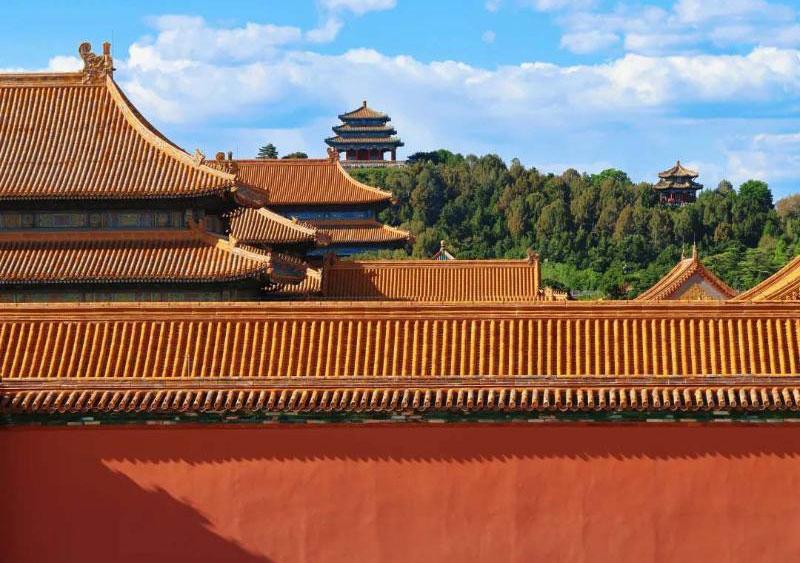
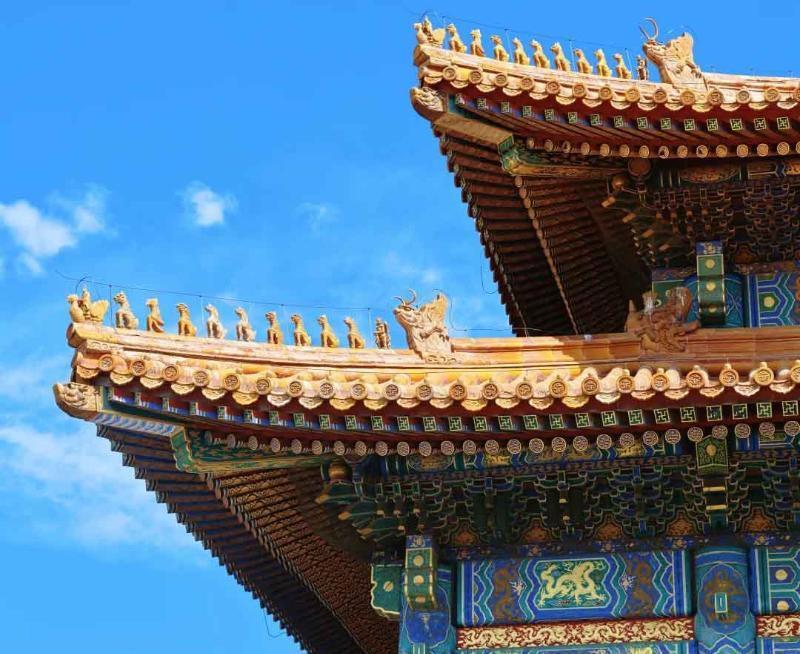
The most iconic view of the Forbidden City is its red walls and yellow glazed tiles. Against the backdrop of a clear blue sky, the golden rooftops with their upturned eaves look magnificent. Along the ridges of the roofs, a row of mythical beasts stands guard, symbolizing the supreme power of the ancient emperors. Every brick and tile here tells a story of over 600 years of history.
The corner towers of the Forbidden City are architectural masterpieces. With their unique multi-eaved structure, they look like exquisite pavilions floating above the moat. The reflection of the red walls and the watchtower in the water is breathtaking, especially at sunset when the sky turns golden.
Practical Info & Tips
Address:No. 4 Jingshan Qianjie, Dongcheng District, Beijing
Hours: Apr–Oct: 8:30–17:00 (last entry 16:10); Nov–Mar: 8:30–16:30 (last entry 15:40)
Closed:Mondays (except public holidays)
Ticket Price:Peak season: 60 yuan; Off season: 40 yuan
Time Needed:4 to 6 hours is recommended
Important: Tickets must be booked online 7 days in advance via the official WeChat mini-program. Tickets are not sold on-site, and you will need your passport for entry . The route is one-way: you enter from the south (Meridian Gate) and exit from the north (Gate of Divine Prowess) . Wear comfortable walking shoes!
What to See (Highlights)
The Central Axis
This is the main route. Start at the Meridian Gate (main entrance), then walk through the Hall of Supreme Harmony, Hall of Complete Harmony, and Hall of Preserving Harmony. These are the grand halls where emperors held ceremonies . End the central walk at the Imperial Garden with its ancient trees and rockeries .
The Treasure Gallery & Clock Gallery
These are special exhibits that require a separate ticket (buy them inside the app). The Treasure Gallery displays royal jewelry, gold items, and rare artifacts like the golden seal and coral lion . The Clock Gallery is a personal favorite—it has amazing 18th-century mechanical clocks from Europe and China .
Hall of Mental Cultivation
This was the emperor's actual living and working space in the Inner Court. This is where Empress Dowager Cixi once ruled from behind a screen. It has been restored to show its original imperial style .
Yanxigong (Less Crowded Spot)
If you want to escape the crowds, take a detour to this side palace. It is quieter, has beautiful architecture, and is great for photos .
Visitor Reviews & Honest Opinion
Most visitors agree that the Palace Museum is a "must-see" in China, but opinions are mixed on the experience.
The Good: People are amazed by the sheer size and beauty of the red walls and golden roofs . One visitor called it "600 years of splendor" and said the architecture is a "breathtaking sight" even without looking at the exhibits . Many reviewers also praise the quality of the souvenirs, especially the "Cultural Creative" products that are unique and high-quality .
The Bad: It gets extremely crowded. You should expect long security lines to enter the museum and the square . Some visitors note that the official website could be better and that there is a gap between expectations and the actual service experience, such as staff services and feedback . Basically, you need to plan well to enjoy it.
Final Tip: Arrive early (before 8:30 AM) to beat the crowds, and consider using an audio guide to understand the history behind the bricks and tiles—it makes the visit much more meaningful